
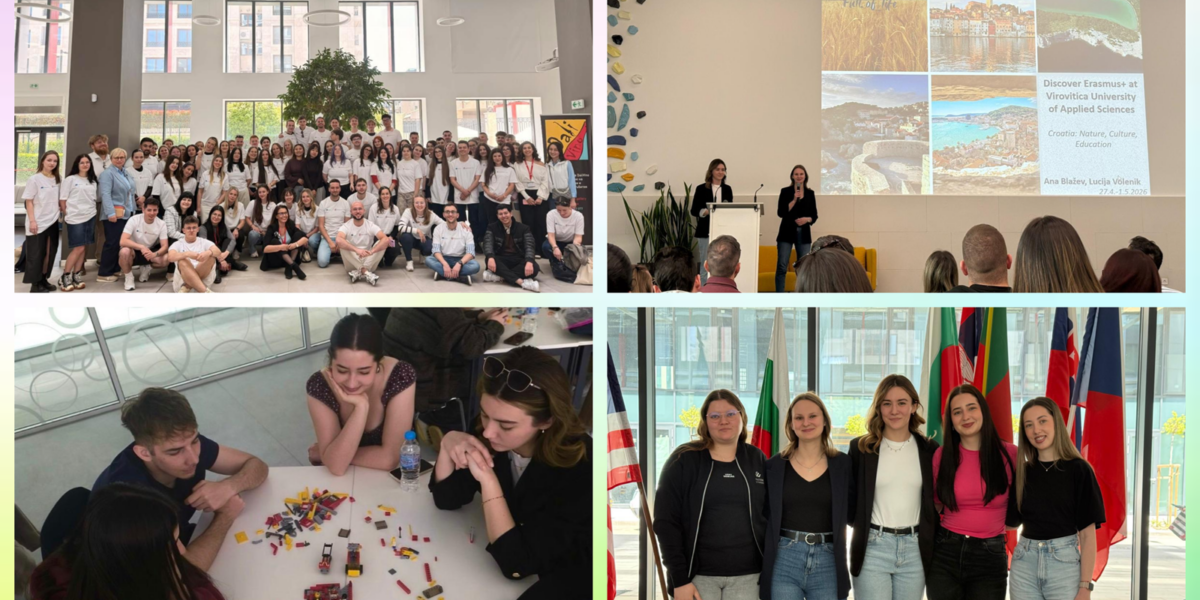
Five students from different study programmes and levels (Destination Management, Small and Medium Enterprise Management and Entrepreneurship), Karla Tomić, Lucija Volenik, Ana Blažev, Lara Strišković and Laura Baksa, took part in an Erasmus+ Blended Intensive Programme (BIP) mobility in Sofia, Bulgaria. The programme, “Summer School on Entrepreneurship and Innovation – Digital Cultural Heritage Innovation Lab: From Content to Market Impact”, was organised by the partner institution International Business School (IBS) Sofia. Its virtual component took place on 20 April 2026, followed by the in-person part from 27 April to 1 May 2026.
The programme brought together more than 80 participants from 12 countries and 18 higher education institutions, giving students the opportunity to cooperate internationally, exchange experiences and develop innovative project ideas in entrepreneurship, digital cultural heritage and sustainable development.
Working in international teams, the students developed projects linking digital innovation, cultural heritage and market application. Through workshops, mentoring and team activities they built their creative thinking, entrepreneurial and presentation skills, and their competences for working in an international environment.
Alongside the academic programme, participants learned about other cultures and education systems through presentations by the partner institutions and participating countries, and took part in organised cultural activities and a sightseeing tour of Sofia.
The students say the Erasmus+ experience gave them new knowledge, international contacts and valuable experience for their further studies and careers. They particularly highlight the value of working in international teams, exchanging ideas with peers from other countries, and gaining self-confidence and openness to new challenges.
Having successfully completed all their BIP obligations, the students earned 3 ECTS credits, which the University will recognise in line with Erasmus+ rules and its internal procedures for recognising mobility.
Taking part in programmes like this further contributes to the internationalisation of Virovitica University of Applied Sciences and to the development of students’ intercultural and professional competences through international cooperation and experiential learning.
